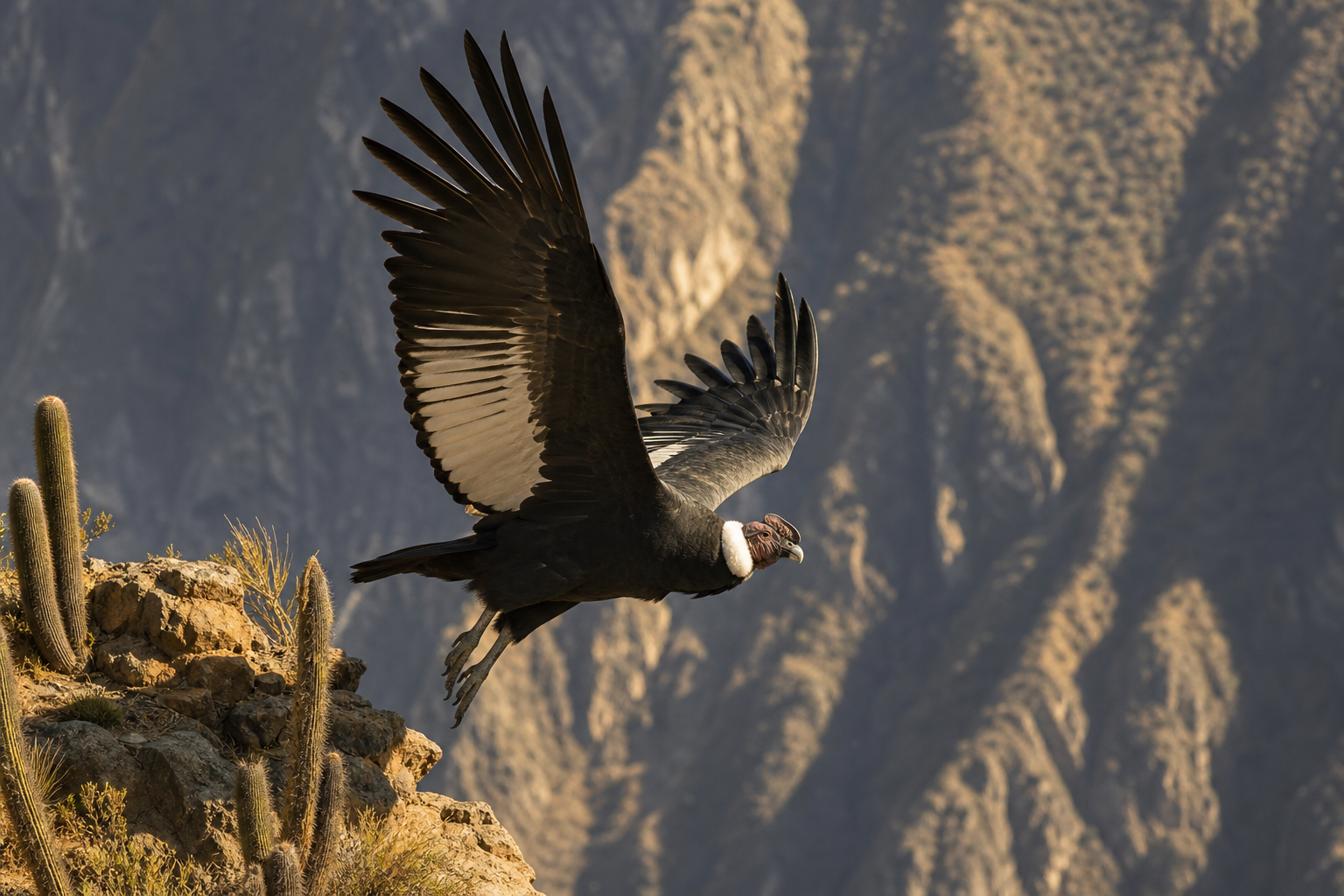
Morning reaches the Colca Canyon in layers: first a gray wash on the cliff, then a stripe of gold along the rim, then the first lift of warm air rising from the abyss. A dark shape waits on a ledge with its wings half-open, feeling for the moment when stone begins to breathe. When the current strengthens, the condor steps into nothing and does not fall.
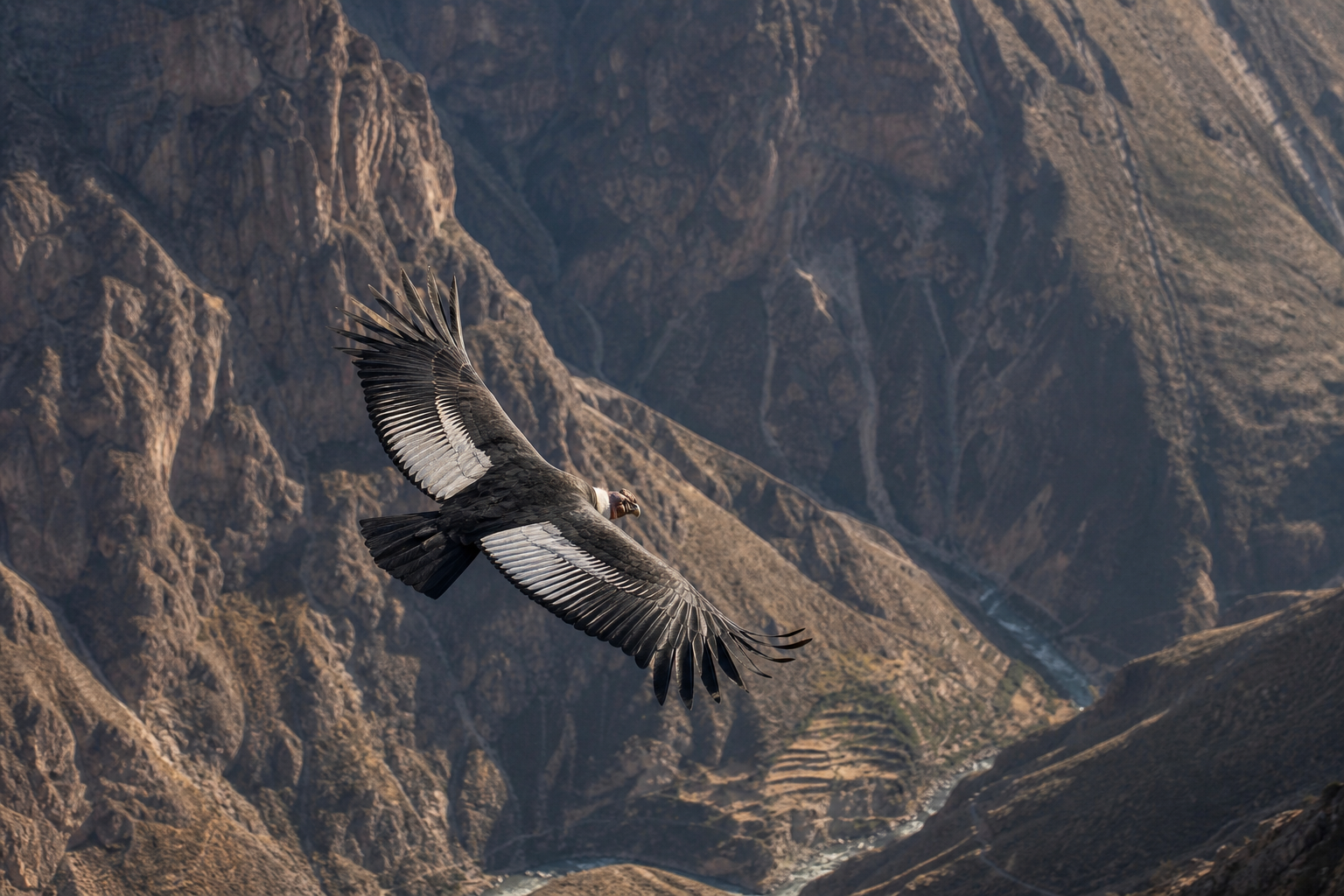
It flies with an economy that makes effort look almost unnecessary. The wings barely move. They adjust, tilt, hold, and the bird writes a slow circle over terraces, cactus, and the thin silver line of water far below. Up close, there is no softness to it. The head is bare, the eye direct, the body built for distance and aftermath. Condors read the land by absence: a still body on a slope, a fox leaving a carcass, the gathering of other birds. Their work is not gentle, but it is clean. They return flesh to the mountain before rot can take command.
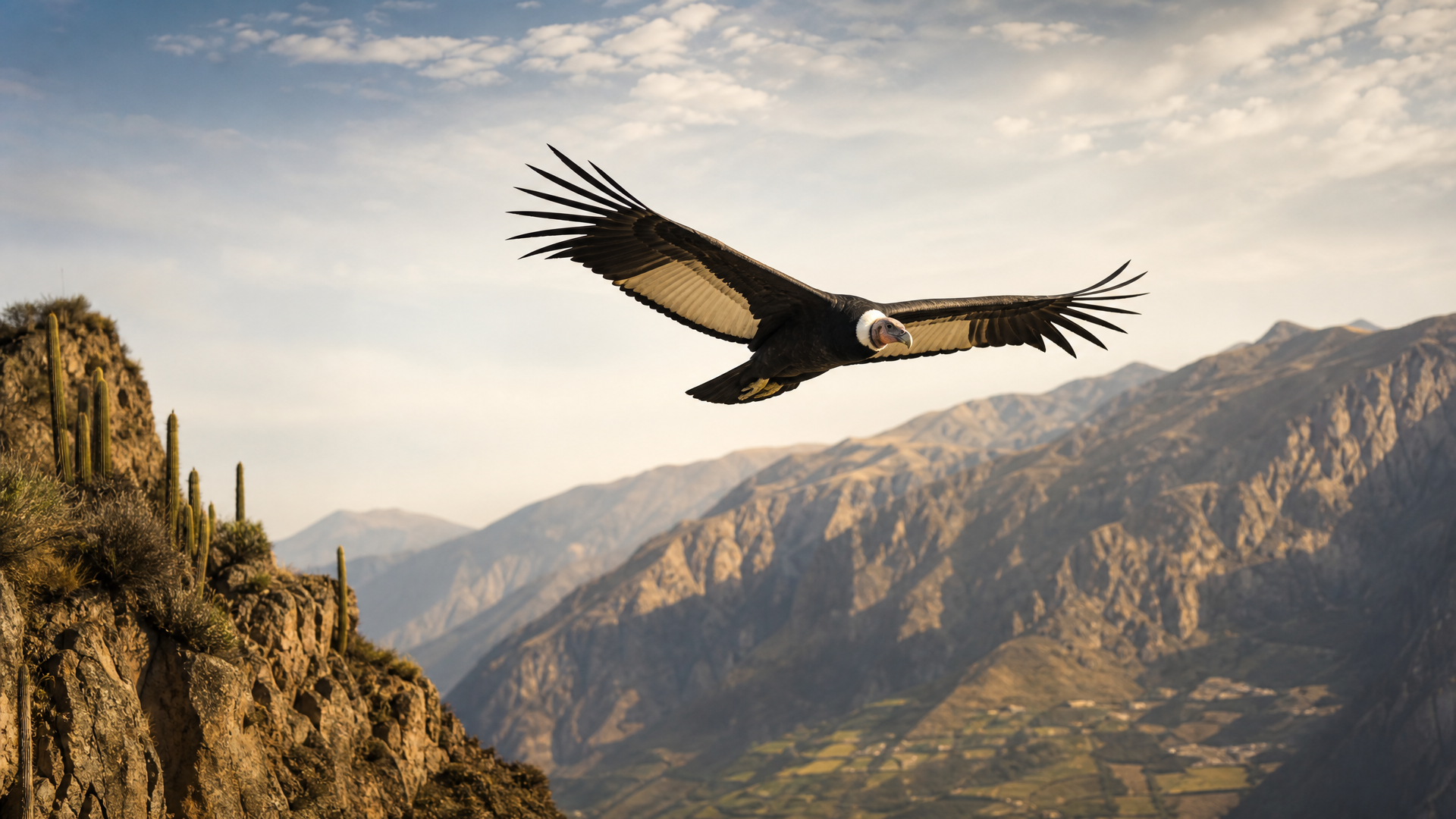
The high Andes give little away, and even a bird made for height now meets a changed sky. Poisoned carcasses, power lines, and shrinking wild places interrupt routes older than the roads below. Still, above Colca, a condor can cross from shadow to sun without a wingbeat, carrying the canyon's silence on its back.