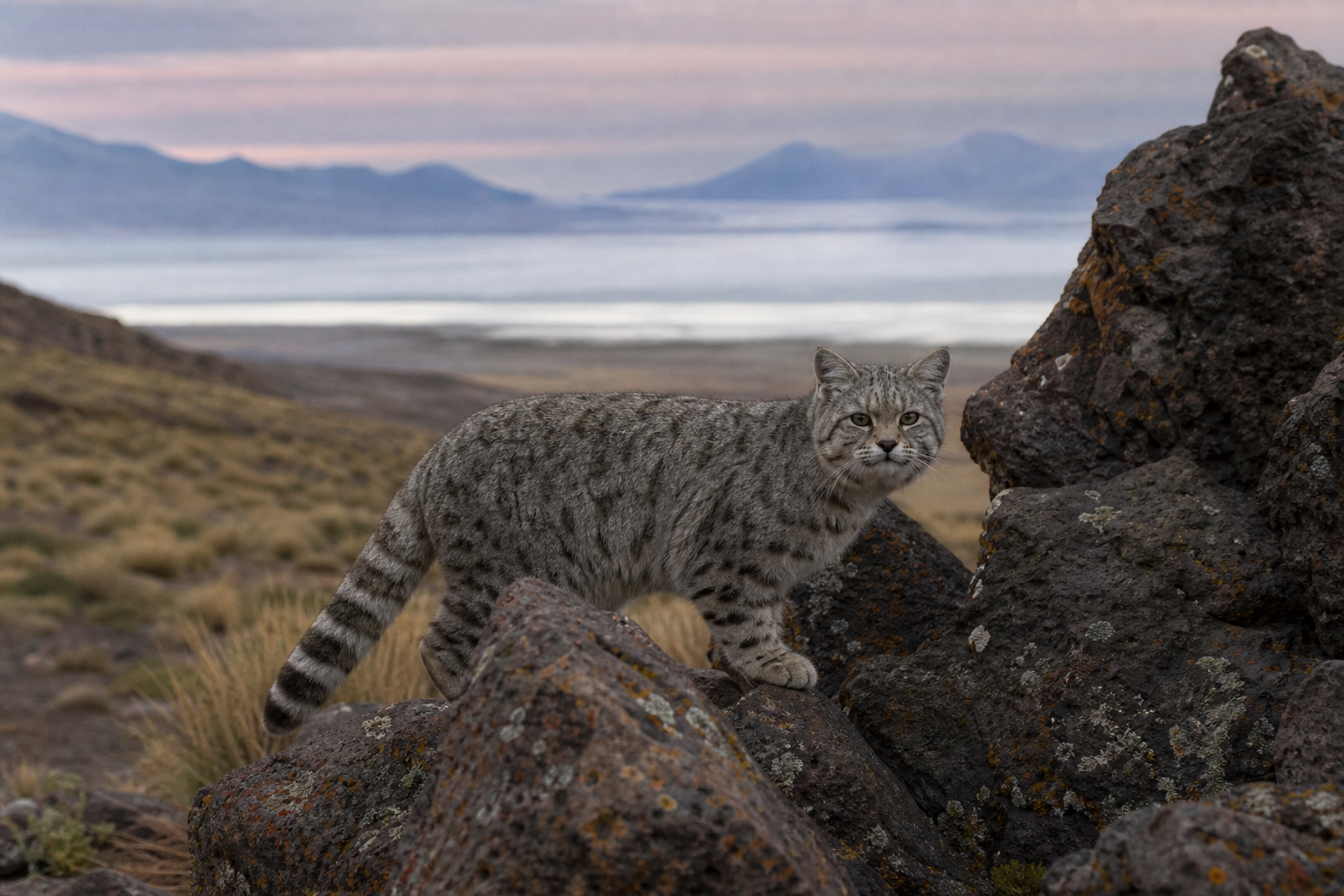
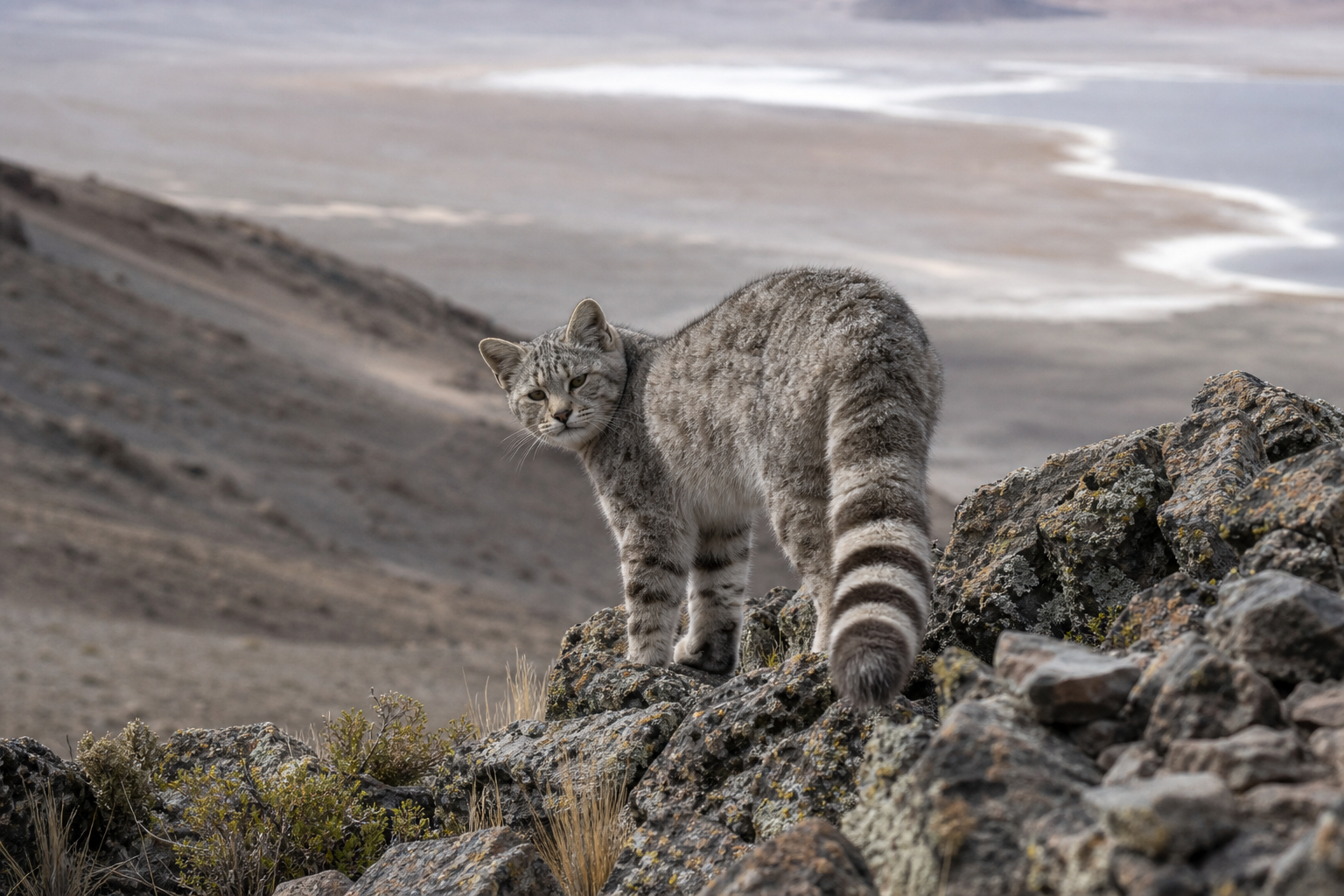
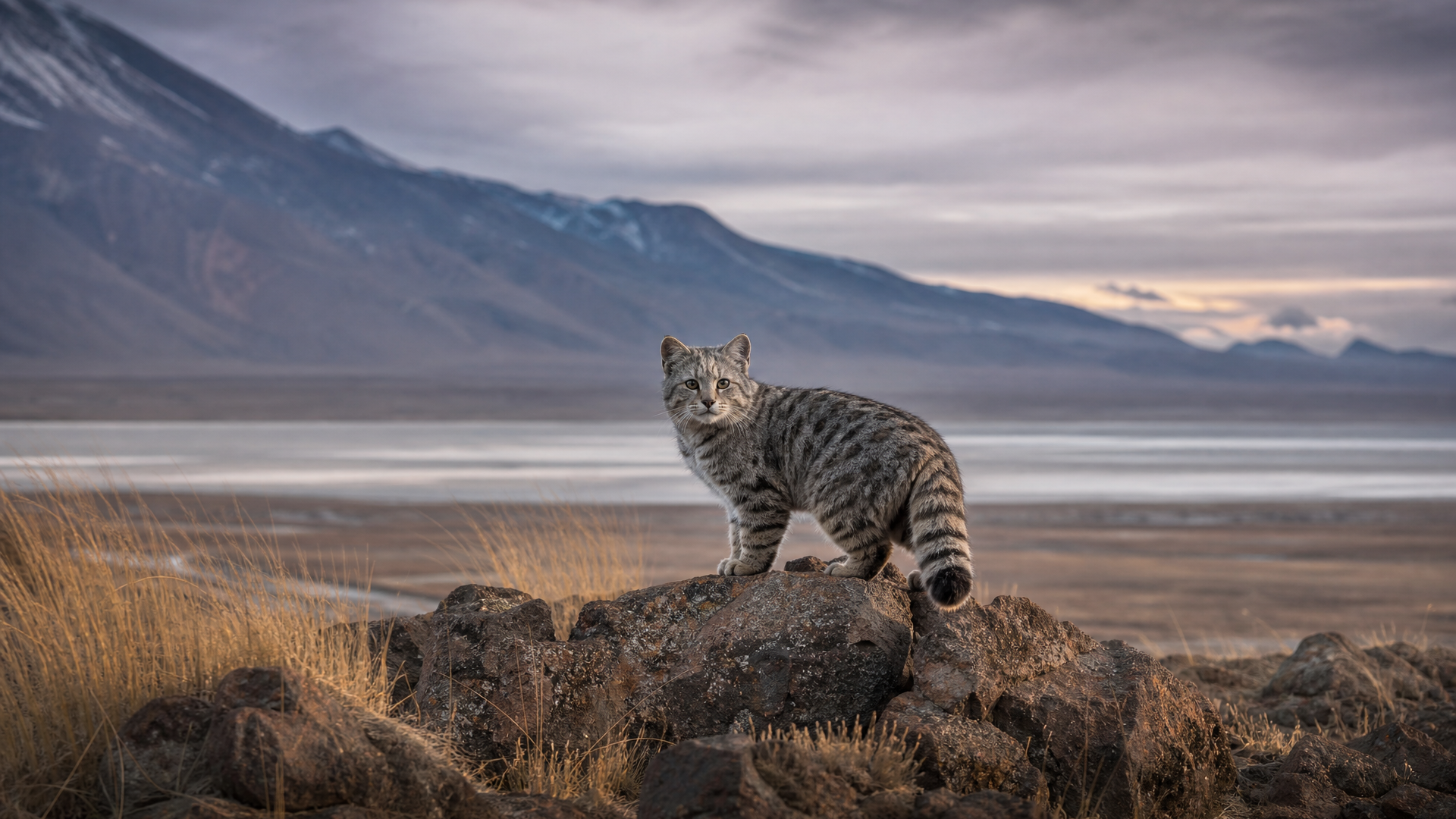
The rocks above Salar de Surire hold the last warmth of the day. Wind slides over the puna grass, viscachas watch from their ledges, and a gray tail with dark rings passes once between two stones. For a moment there is only the shape of a cat where the mountain seemed empty.
The Andean cat belongs to distance. It moves through broken lava and high scree with a silence that feels less like stealth than belonging. Its coat dissolves among ash-colored rock, its large tail balancing each careful leap, its ears tuned to the scrape of claws and the thin whistles of rodents. It marks stones with scent and passes along ridgelines that may be used for generations, a hidden map laid over a country of salt flats, volcanoes, and cold streams. To see one is usually to see the end of the encounter: a turn of the head, a pause, then the animal vanishing into geology.
So much depends on small lives among these rocks. When mining, roads, and changing water patterns disturb the high wetlands, the effects climb into the hunting grounds above them. The cat remains almost mythic because it is rare, but rarity is not myth. Somewhere after sunset, paws touch stone, and the mountain keeps moving.