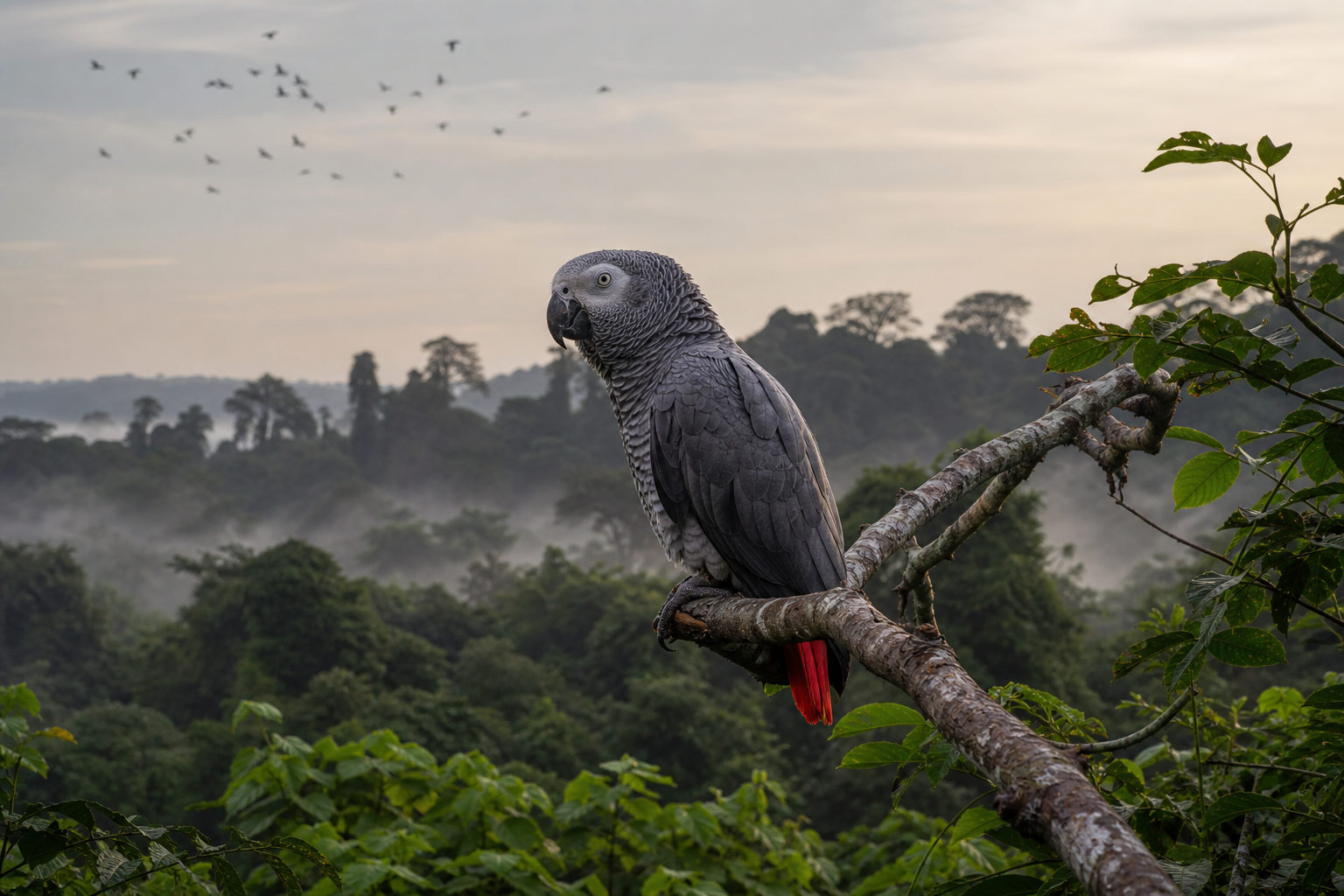

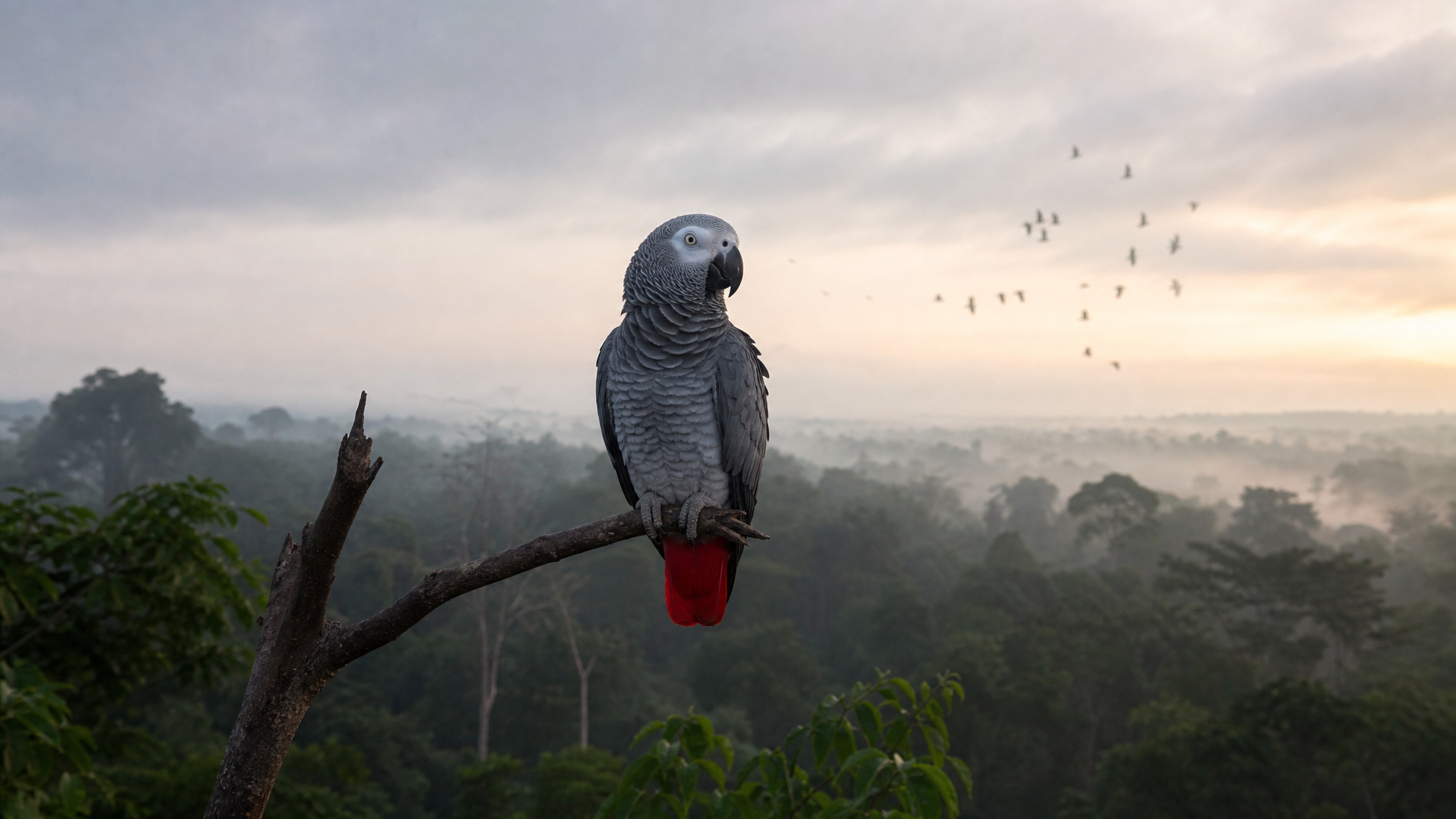
At first light, the forest edge fills with conversation. Not one voice, but many: whistles, cracks, murmurs, and clear ringing notes that seem almost borrowed from other beings. Then a flock of African grey parrots lifts from the trees, grey bodies flashing silver in the dawn, red tails burning briefly as they turn.
Their intelligence is not theatrical in the wild; it is practical, social, and quick. They watch one another closely, learn routes to fruiting trees, keep track of companions, and fill the air with calls that hold the flock together. A perched parrot handles a seed with its foot as delicately as a hand, cracking, testing, discarding, choosing. The pale face gives it an alert, listening expression, as though every sound enters and stays. In the forests of West and Central Africa, their voices make distance feel inhabited.
Because people have long admired that voice, many parrots have been taken from the very forests that shaped it. Trade, trapping, and forest loss have thinned flocks that once gathered in noisy abundance.
Yet when greys rise together from a roost, the sky briefly fills with evidence of another kind of mind: social, watchful, full of remembered sound. They carry seeds, warnings, and contact calls through the canopy. The red tails disappear into green, and the forest keeps speaking where they have gone.