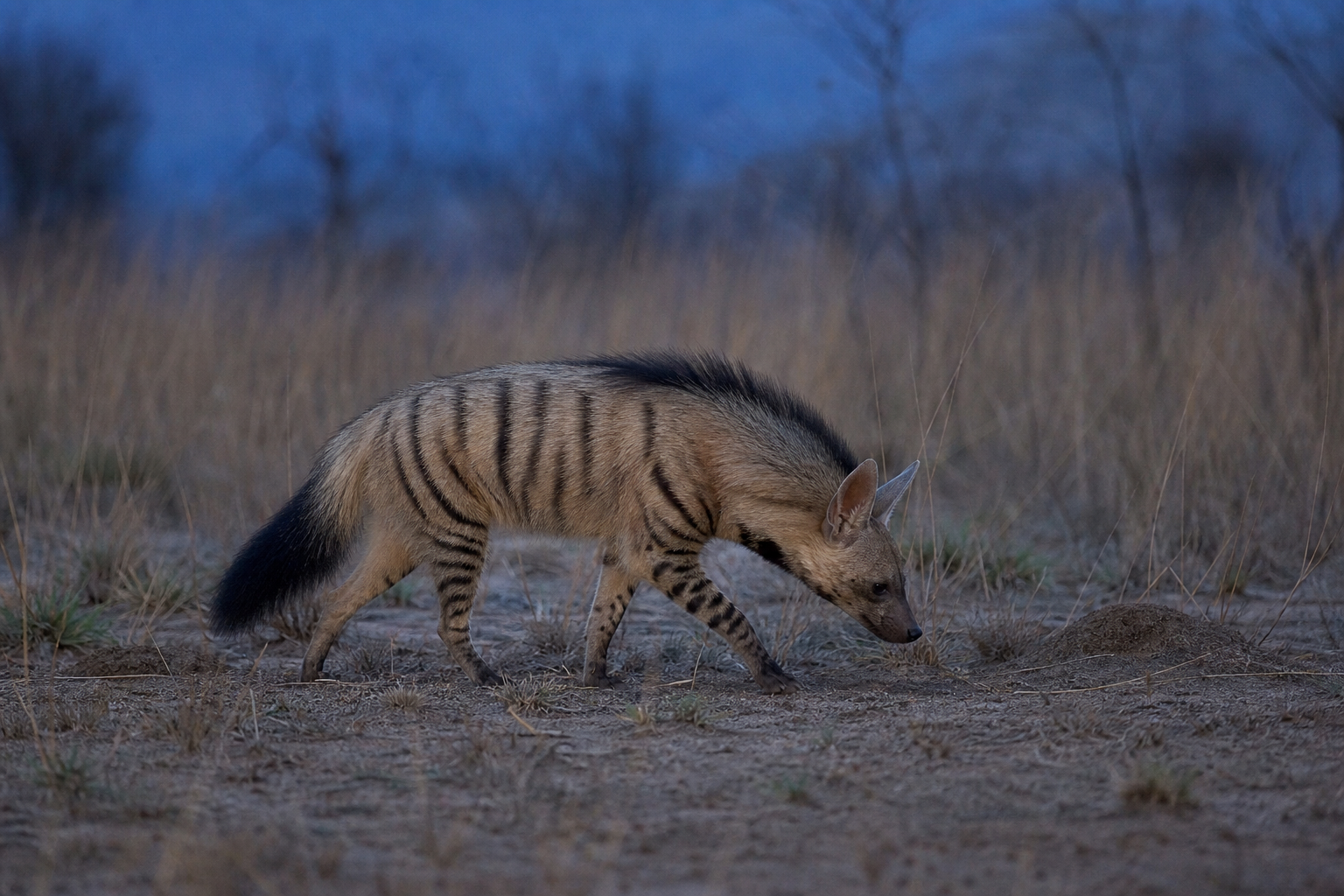
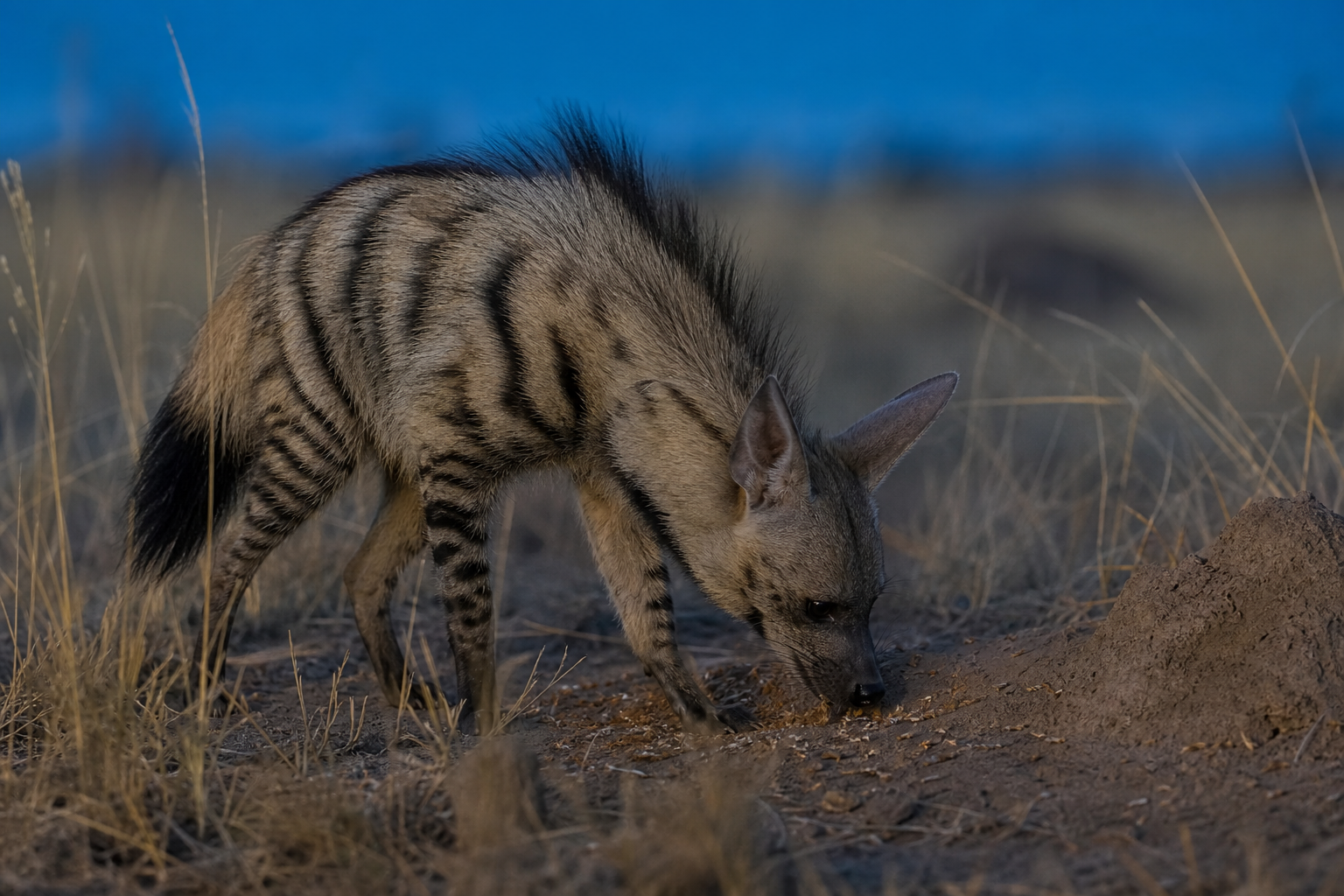
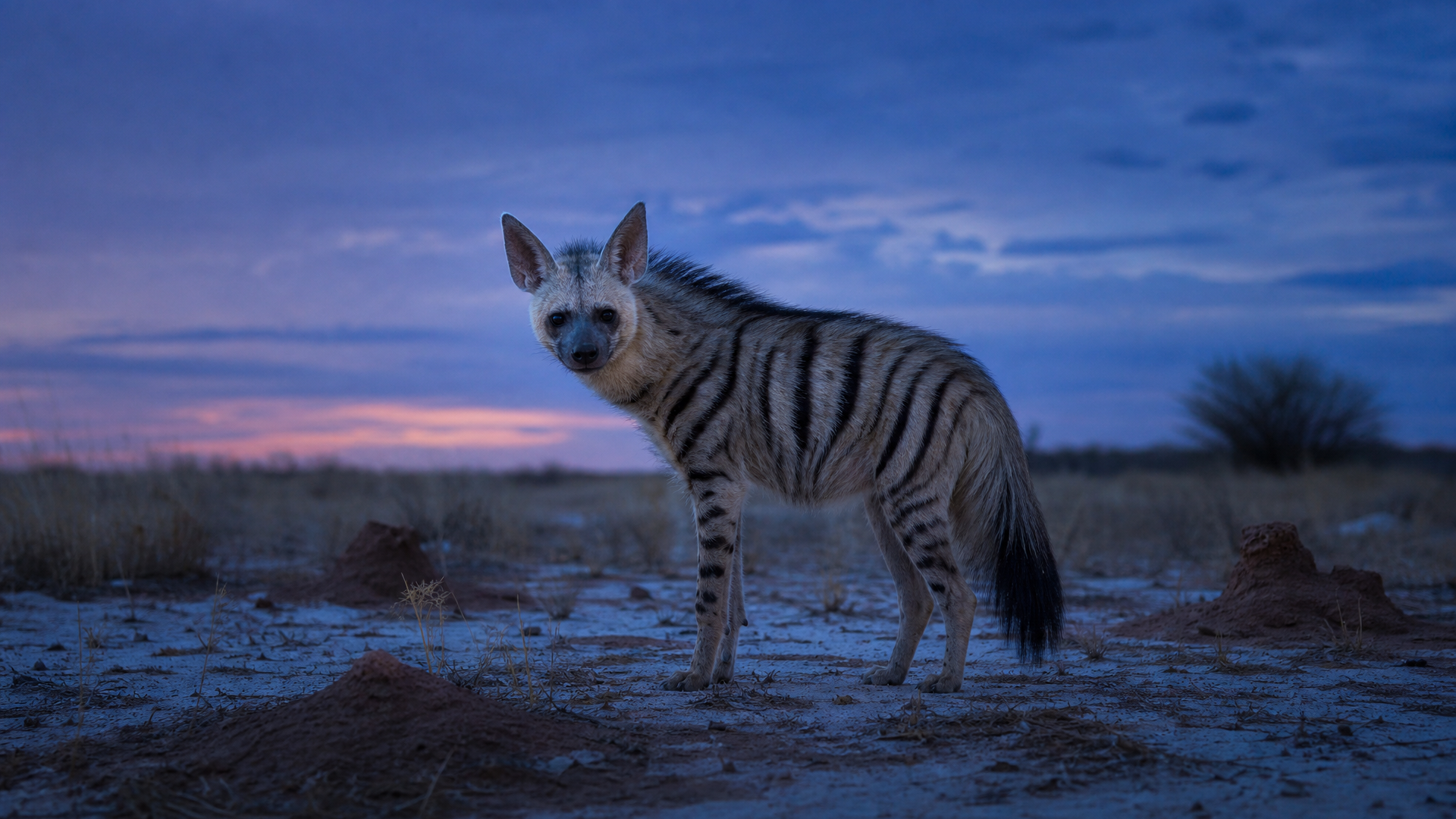
After dark, the grass begins to tick and whisper. Termites rise from their hidden roads, and the aardwolf moves through the plain with its nose low and ears pitched forward. Stripes cross its pale body. A dark mane lies folded along the spine, ready to lift if fear finds it.
The shape suggests hyena, but the life is almost the opposite. The aardwolf is not built for bone or brawl. Its teeth are reduced, its tongue is long and sticky, and its hunger leads it to harvester termites spread through the night grass. It listens, noses, licks, and moves on, leaving the mound alive enough to feed from again.
There is restraint in that feeding. It takes without wrecking the country that feeds it. By day it vanishes into burrows, sometimes those dug by aardvarks or porcupines. By night it patrols a quieter map than lions and rhinos ever use.
In Southern Africa's dry grasslands, the aardwolf is a correction to easy categories. Predator, insect eater, hyena, almost not hyena. It slips through starlight, and the plain continues its hidden work beneath its feet.